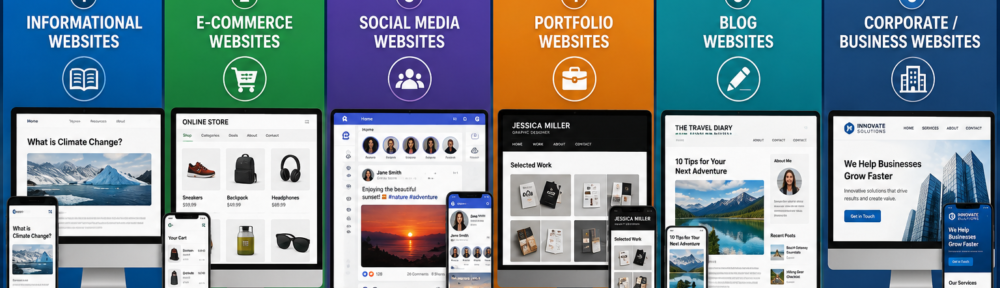
Ever typed a question into Google and wondered why some results look like online stores, others like blogs, and some like social media feeds? That’s because the internet isn’t just one big blank page—it’s made up of different types of websites, each serving a unique purpose. If you’ve ever asked yourself “What are the six types of websites?” you’re not alone. This is one of the most common questions from people just starting their online journey, students doing research, or even small business owners trying to figure out what kind of site they need.
In this guide, we’ll break down the six main types of websites in simple, easy-to-understand language. No jargon, no fluff—just clear, helpful information that answers your question directly. Whether you’re building your first site or just curious about how the web works, you’ll walk away with a solid understanding of what makes each type unique.
1. Informational Websites: Your Go-To for Answers
Informational websites are exactly what they sound like—they exist to provide information. Think of them as the online version of a library or encyclopedia. When you search “What is climate change?” or “How does photosynthesis work?” and land on a page that explains the topic step-by-step, you’re probably on an informational website.
These sites prioritize content that educates, explains, or informs. Common examples include:
- Wikipedia – The world’s largest free encyclopedia
- Government websites (.gov) – Offering official information on laws, services, and public data
- News outlets – Like BBC, CNN, or Reuters, delivering current events
- Educational blogs – Sites that teach specific skills or share expertise
- Health information portals – Such as Mayo Clinic or WebMD
What makes informational websites special is their focus on user intent. People visiting these sites aren’t looking to buy something or sign up for a service—they want to learn. That’s why Google often shows informational sites at the top of search results for “what is,” “how to,” or “why” questions.
Key characteristics of informational websites:
- Content-heavy with articles, guides, or FAQs
- Easy to navigate with clear headings and search bars
- Minimal or no sales pitches
- Regularly updated to keep information current
- Often include images, videos, or infographics to enhance understanding
If you’re creating content for an informational site, remember: your goal is to answer questions thoroughly and accurately. People trust these sites because they provide value without trying to sell you anything.
2. E-Commerce Websites: Where Shopping Happens Online
Next up are e-commerce websites—the digital versions of retail stores. If you’ve ever bought something online (and who hasn’t?), you’ve visited an e-commerce site. These platforms are designed specifically for buying and selling products or services over the internet.
Popular examples include:
- Amazon – The giant online marketplace
- Etsy – Handmade and vintage goods
- Shopify stores – Independent brands selling their products
- eBay – Auction-style and fixed-price sales
- Walmart.com – The online extension of the physical store
E-commerce websites have several unique features that set them apart:
| Feature | Purpose |
|---|---|
| Product catalogs | Display items with photos, descriptions, and prices |
| Shopping carts | Let users collect items before checkout |
| Payment gateways | Securely process credit cards, PayPal, etc. |
| User accounts | Save shipping info, track orders, view history |
| Reviews & ratings | Build trust through customer feedback |
What makes e-commerce sites successful is their focus on conversion—turning visitors into buyers. Every element, from product photos to checkout buttons, is optimized to make shopping as smooth as possible.
Modern e-commerce sites also use personalization. They might show you “Recommended for you” based on your browsing history or send abandoned cart emails to remind you to complete your purchase. These smart features make online shopping feel personal and convenient.
Whether you’re a small business selling handmade crafts or a large corporation moving thousands of products daily, an e-commerce website is your 24/7 salesperson that never takes a break.
3. Social Media Websites: Connecting People Worldwide
Social media websites are platforms designed for people to connect, share content, and build communities. These sites have transformed how we communicate, turning the internet from a one-way information source into a two-way conversation.
Big names you definitely know:
- Facebook – Connect with friends, join groups, share life updates
- Instagram – Photo and video sharing with stories and reels
- Twitter (X) – Real-time news and short-form conversations
- TikTok – Short, addictive video content
- LinkedIn – Professional networking and career opportunities
- Pinterest – Visual discovery and bookmarking platform
What sets social media apart from other website types:
- Community-driven content: Unlike informational sites where experts create content, social media thrives on user-generated content. Everyone from celebrities to your cousin can post videos, photos, or thoughts.
- Interactive features: Likes, comments, shares, DMs, and reactions make these platforms highly engaging. You’re not just consuming content—you’re participating in it.
- Algorithm-powered feeds: Social media sites use smart algorithms to show you content they think you’ll enjoy, keeping you scrolling longer.
- Real-time updates: News breaks on Twitter, trends explode on TikTok, and viral moments happen instantly.
Social media websites also serve business purposes. Brands use them for市场营销, customer service, and building brand awareness. Many small businesses grow entirely through Instagram or TikTok without needing a traditional website.
The social media landscape keeps evolving. What started as simple text posts has grown into live streaming, shopping integrations, and AI-powered content recommendations. But the core purpose remains the same: connecting people.
4. Portfolio Websites: Showcasing Your Best Work
Portfolio websites are digital showcases for creative professionals to display their work. Think of them as an online resume mixed with an art gallery. Instead of just listing your skills, you let your work speak for itself.
Who uses portfolio websites?
- Photographers – Displaying their best shots
- Graphic designers – Showing logos, branding projects, layouts
- Writers & content creators – Featuring articles, blog posts, copysamples
- Web developers – Demonstrating coding projects and live sites
- Artists & illustrators – Presenting drawings, paintings, digital art
- Video editors & filmmakers – Showcasing reels and full projects
- UX/UI designers – Presenting case studies and app designs
Key elements of a strong portfolio website:
- Visual-first design: Your work should be the star. Clean layouts, plenty of white space, and high-quality images let your creations shine.
- Organized categories: Group work by type (e.g., “Photography,” “Branding,” “Web Design”) so visitors can easily find what interests them.
- Case studies: For complex projects, explain your process. What was the challenge? What did you do? What were the results?
- About section: Share your story, skills, and personality. People hire humans, not just portfolios.
- Contact information: Make it easy for potential clients or employers to reach you.
Unlike e-commerce sites that sell products or informational sites that teach, portfolio websites sell you. They’re your personal brand hub where potential clients see what you’re capable of before hiring you.
Many creative professionals use platforms like Behance, Dribbble, or Squarespace to build portfolios, but custom websites give you complete control over design and branding. Your portfolio is often the first impression you make on clients, so making it count is crucial.
5. Blog Websites: Sharing Stories, Tips, and Expertise
Blog websites are platforms where individuals or organizations publish regular articles, known as blog posts. What started as online diaries has evolved into a powerful content marketing tool used by businesses, experts, and hobbyists worldwide.
Types of blogs you might recognize:
- Personal blogs – Sharing life experiences, opinions, and stories
- Niche blogs – Focusing on specific topics like travel, cooking, or fitness
- Business blogs – Companies sharing industry insights to attract customers
- News blogs – Covering current events in specific industries
- Educational blogs – Teaching skills through step-by-step guides
- Lifestyle blogs – Covering fashion, home decor, relationships, and more
What makes blogs special:
- Fresh content: Blogs are updated regularly, which keeps visitors coming back and signals to Google that your site is active.
- SEO-friendly: Well-written blog posts rank well in search results because they answer specific questions people are asking.
- Community building: Comments sections let readers engage with the author and each other.
- Monetization opportunities: Blogs can earn money through ads, affiliate marketing, sponsored posts, or selling products.
- Authority building: Consistently sharing valuable information establishes you as an expert in your field.
Successful blogs focus on user intent. If someone searches “How to train a puppy,” they want actionable tips, not a sales pitch. Blogs that answer questions clearly and helpfully tend to rank higher and build loyal readerships.
Many businesses now use blogs as part of their content marketing strategy. They attract visitors through helpful articles, then gently guide them toward products or services. This approach builds trust before asking for a sale.
The best blogs combine informative content with personality. Readers return not just for information but for the author’s unique voice and perspective.
6. Corporate/Business Websites: Your Company’s Digital Front Door
Corporate or business websites represent companies online. They’re the digital version of your company’s office, showing visitors who you are, what you do, and why they should choose you.
What’s typically included on a corporate website:
- Homepage: A welcoming introduction highlighting your main offerings and value proposition.
- About Us page: Your company’s story, mission, values, and team members.
- Products/Services page: Detailed descriptions of what you offer with pricing if applicable.
- Contact page: Phone numbers, email addresses, physical location, and contact forms.
- Testimonials/Case studies: Social proof showing satisfied customers.
- Careers page: Job openings and company culture insights.
- News/Press section: Company announcements and media coverage.
Corporate websites serve multiple purposes:
- Building credibility: A professional website makes your business look legitimate
- Generating leads: Contact forms and calls-to-action capture potential customer information
- Providing information: Customers can learn about your business 24/7
- Supporting customers: FAQs, support portals, and resources help existing clients
- Brand building: Consistent design and messaging reinforce your brand identity
Unlike e-commerce sites that focus on transactions, corporate websites often focus on relationship building. They’re designed to educate visitors about your company and convince them to make contact, whether through a phone call, email, or in-person visit.
Modern corporate websites are also mobile-friendly, fast-loading, and optimized for search engines. They use clear navigation, compelling visuals, and strong calls-to-action to guide visitors toward taking the next step.
Whether you’re a Fortune 500 company or a local plumbing business, your corporate website is often the first place potential customers go to learn about you. Making it professional, informative, and easy to use is essential for business success.
Why Understanding Website Types Matters
Now that you know the six types of websites—informational, e-commerce, social media, portfolio, blog, and corporate—you might wonder: why does this matter?
Here’s the thing: not all websites are created equal. Each type serves a different purpose and requires a different approach to design, content, and marketing.
If you’re trying to sell products, an informational blog won’t cut it—you need an e-commerce site. If you’re a freelancer looking for clients, a corporate website might be overkill; a portfolio site would be more effective. If you want to build an audience and share knowledge, a blog is your best friend.
Understanding these differences helps you:
- Choose the right type for your goals
- Set realistic expectations about what your site can do
- Communicate better with web developers or designers
- Optimize for search engines by matching content to user intent
- Avoid wasting money on features you don’t need
When you search Google for something, you’re subconsciously expecting a certain type of site. Looking to buy? You expect e-commerce. Want to learn? You expect informational content. Socializing? You expect social media. Google’s algorithm is smart enough to show you the right type of website for your intent, which is why understanding these categories matters for both creating and consuming content.
Ready to Build Your Website?
Whether you’re starting a business, showcasing your creative work, sharing your knowledge, or simply curious about how the internet works, knowing the six types of websites gives you a solid foundation. Each type has its strengths, and the best choice depends entirely on your goals.
Remember: the most successful websites clearly fulfill their purpose. An informational site answers questions thoroughly. An e-commerce site makes buying easy. A social media site fosters connection. A portfolio site showcases work beautifully. A blog site delivers consistent value. A corporate site builds trust and generates leads.
Now that you understand what each type offers, you’re better equipped to create, choose, or evaluate websites with confidence. The internet is huge, but with this knowledge, you can navigate it like a pro.